ReverseLogix RMS – Return Experience Optimization
AI-Assisted Return Management Experience
Overview
ReverseLogix provides a platform that helps businesses manage product returns, repairs, and reverse logistics workflows. However, return experiences are often fragmented, confusing, and operationally heavy for both customers and support teams.
For this assignment, the goal was to design a better return management experience that allows users to easily initiate a return, select items, specify return reasons, generate return requests, and track the return status.
The challenge was not only to design the interface, but to improve the overall return experience by simplifying complex workflows, reducing user friction, and introducing AI-assisted interactions to support faster and more accurate return processing.
Goal
The goal of this project was to design a simplified and intelligent return workflow that reduces friction for users while improving operational efficiency for retailers.
Simplify the return initiation process
Improve accuracy of return reason identification
Enable AI-assisted validation of product issues
Reduce manual review workload for retailers
Provide clear visibility into return progress
Problem Context
E-commerce returns have become one of the most complex operational challenges for retailers.
While ordering products online is simple, the return process often involves multiple operational layers, including customer support, logistics partners, warehouse inspection, and refund processing.
Users struggle to identify the correct item to return
Customers often select incorrect return reasons
Retailers require evidence before approving returns
Warehouse teams manually inspect returns due to lack of context
Customers lack visibility into return status after submission
Research & Insights
To better understand return management workflows, I explored how leading platforms structure their return experiences.
Competitor platforms such as Loop Returns and Narvar focus heavily on guided workflows to simplify return requests while maintaining operational visibility.
Key insights from this exploration included:
Guided step-by-step workflows reduce user confusion
Visual product selection improves return accuracy
Real-time tracking builds trust and transparency
Evidence uploads reduce warehouse inspection ambiguity
Userflow
Workflow Entry
Order Identification
Item Selection
Resolution Selection
AI Reason Detection
Issue Explanation
Return Review
Return Logistics
Return Tracking
Design Thinking & High Fidelity
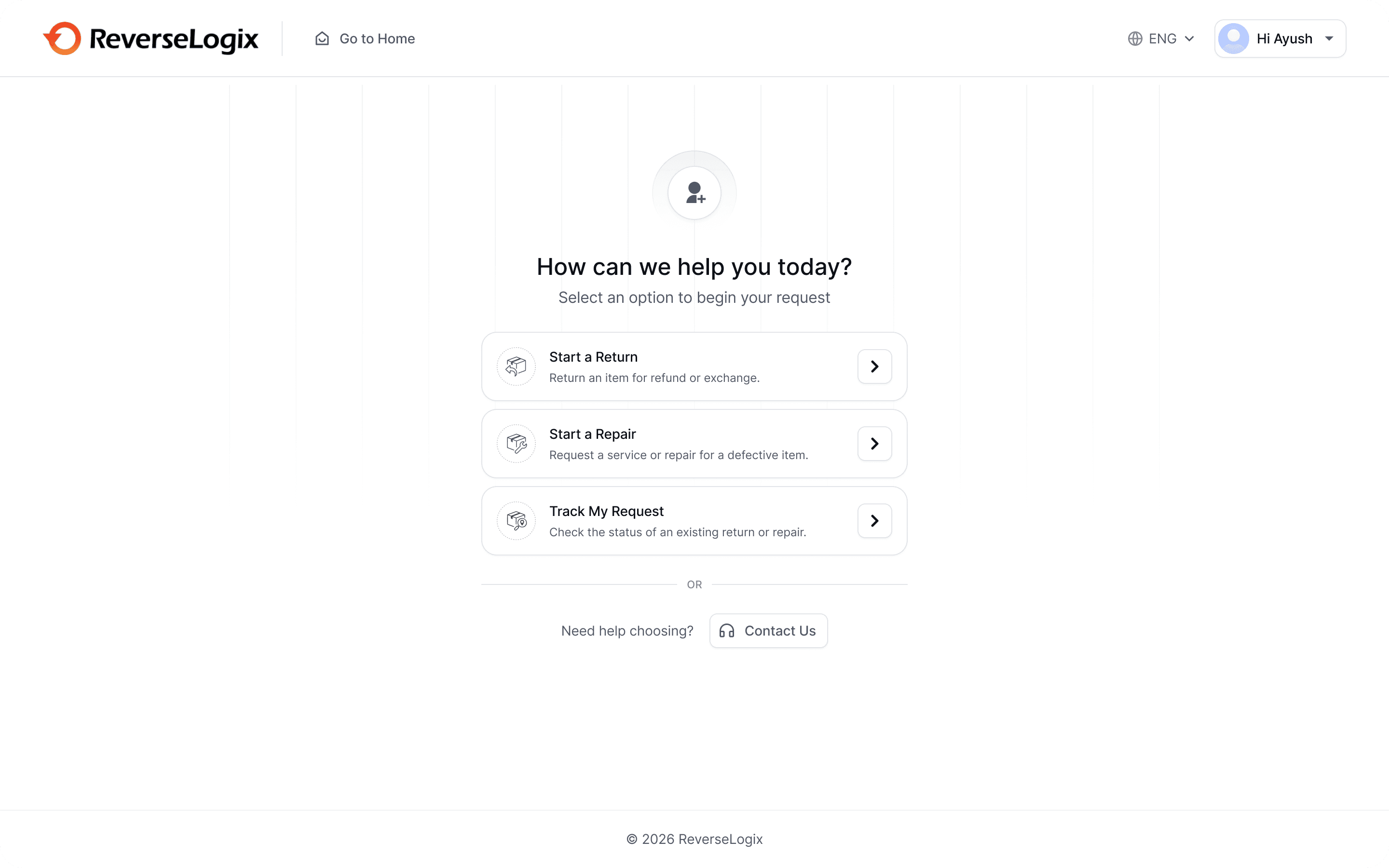
Flow 01 - Workflow Entry Gate
The return journey begins with a workflow entry gate that helps users choose the action they want to perform before starting the process.
Design Approach
I designed layout uses structured option cards instead of simple buttons, improving clarity and helping users select the correct task quickly.
Outcomes - This approach captures user intent early, reduces workflow errors, and ensures users start the correct return journey.
Flow 02 - Return authentication / order identification
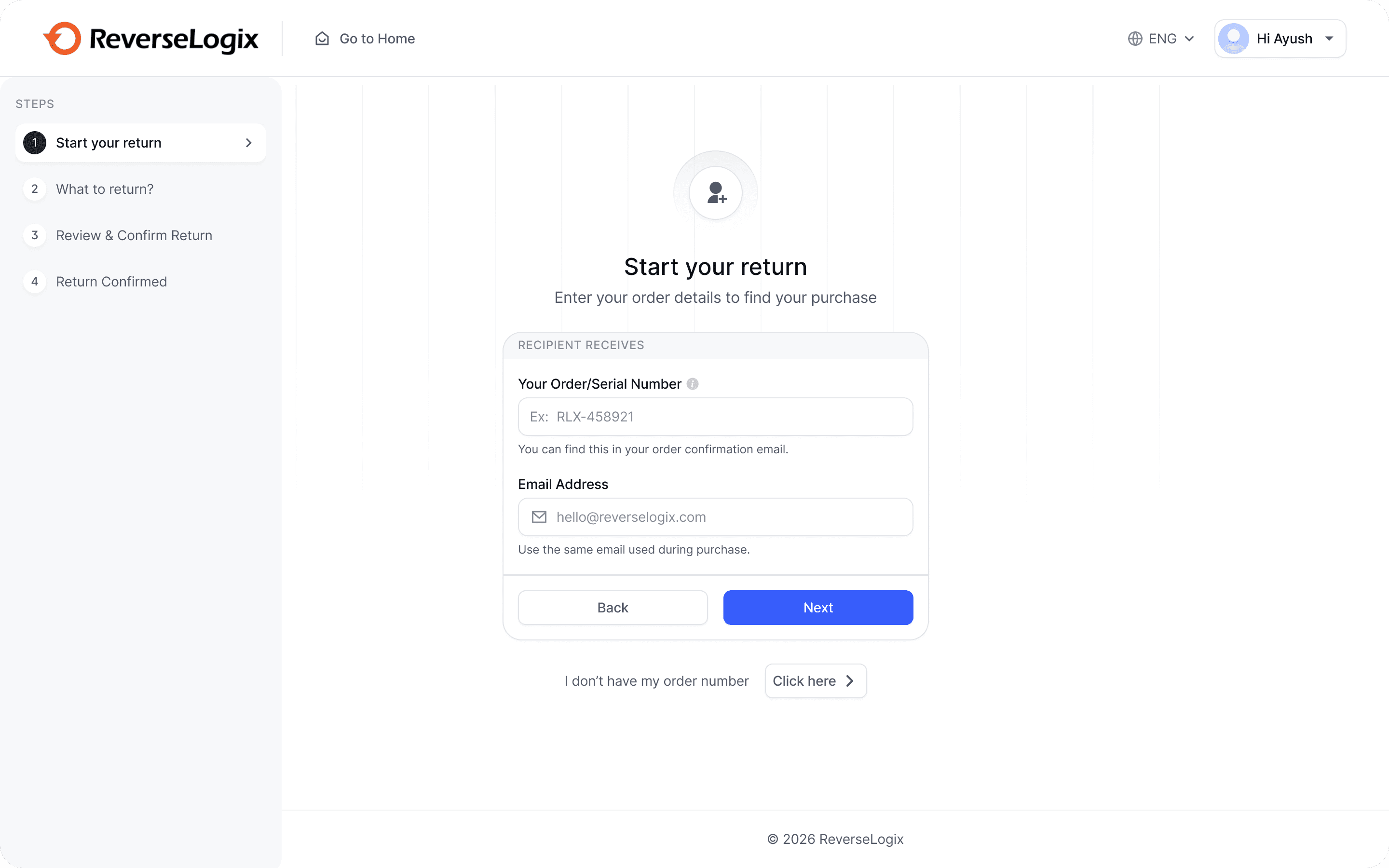
After selecting Start a Return, users must identify their purchase by entering order details.
Problem
Users often struggle to locate order numbers or may enter incorrect details, which can interrupt the return process and increase friction.
Design Approach
I structured the screen as a focused input module with clear guidance and a step indicator to help users understand where they are in the process.
Key improvements include:
Clear step navigation showing return progress
Helpful field hints and examples for order numbers
Instruction to use the purchase email address
This step is not a form, it is a purchase verification step. I reduced cognitive load by adding contextual help, examples, and fallback recovery so users who don’t remember order details can still proceed without contacting support.
Flow 03 - Ordered Product Page
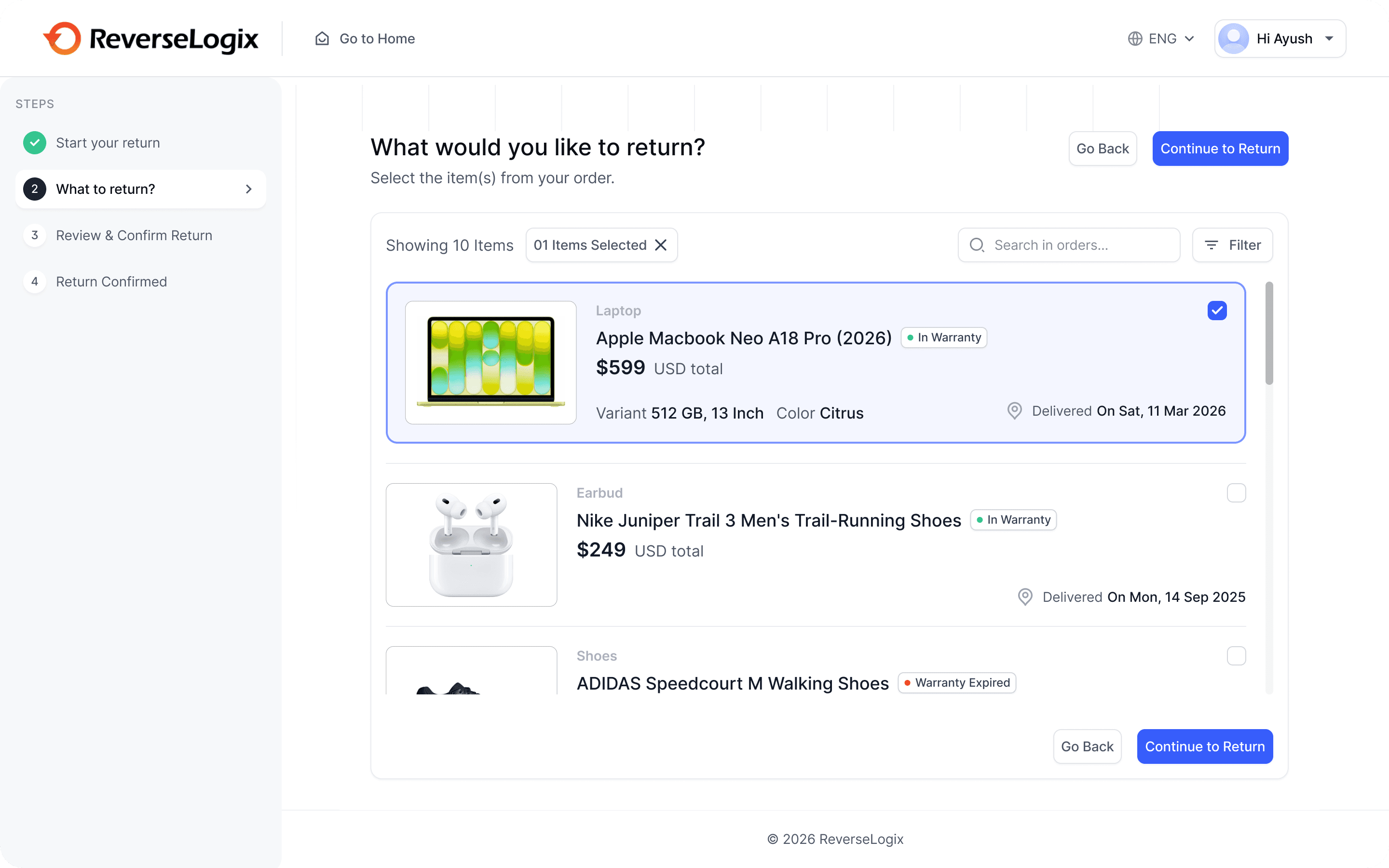
After verifying the order, users must select the specific item(s) they want to return from their purchase history.
The real user problem here
Right now the UI shows by Reverselogix: a list, product details, no strong action
But the user’s real mental state is:
“I just want to return ONE specific item… I don’t want to return the wrong one.”
Design Approach
I redesigned the selection interface using visual product cards that display key information such as product image, price, variant, delivery date, and warranty status.
Key improvements include:
Checkbox selection for multiple items
Search and filter options for large orders
Clear product metadata (variant, warranty, delivery date)
The redesigned layout improves item discoverability, reduces incorrect selections, and enables a smoother transition to the return reason step.
This screen is critical because incorrect item selection breaks the entire reverse logistics chain. I redesigned it to be recognition-based rather than recall-based by emphasizing product imagery, eligibility status, and visual selection feedback.
Flow 04 - Return Reason & AI Validation Modules
After selecting the item to return, users must explain why they are returning the product and choose the desired resolution.
The real user problem here
In the original concept, this was handled in a single screen, but the flow lacked guidance and verification. To improve usability and accuracy, I expanded it into five progressive steps with AI assistance.
Return systems often rely on manual reason selection, which leads to:
incorrect reason categorization
insufficient evidence for validation
increased manual review by warehouse teams
Auto Return Reason Detection
Instead of asking users to immediately choose a return reason, I designed a guided return explanation flow that collects context first and then uses AI to detect the issue.
The flow includes:
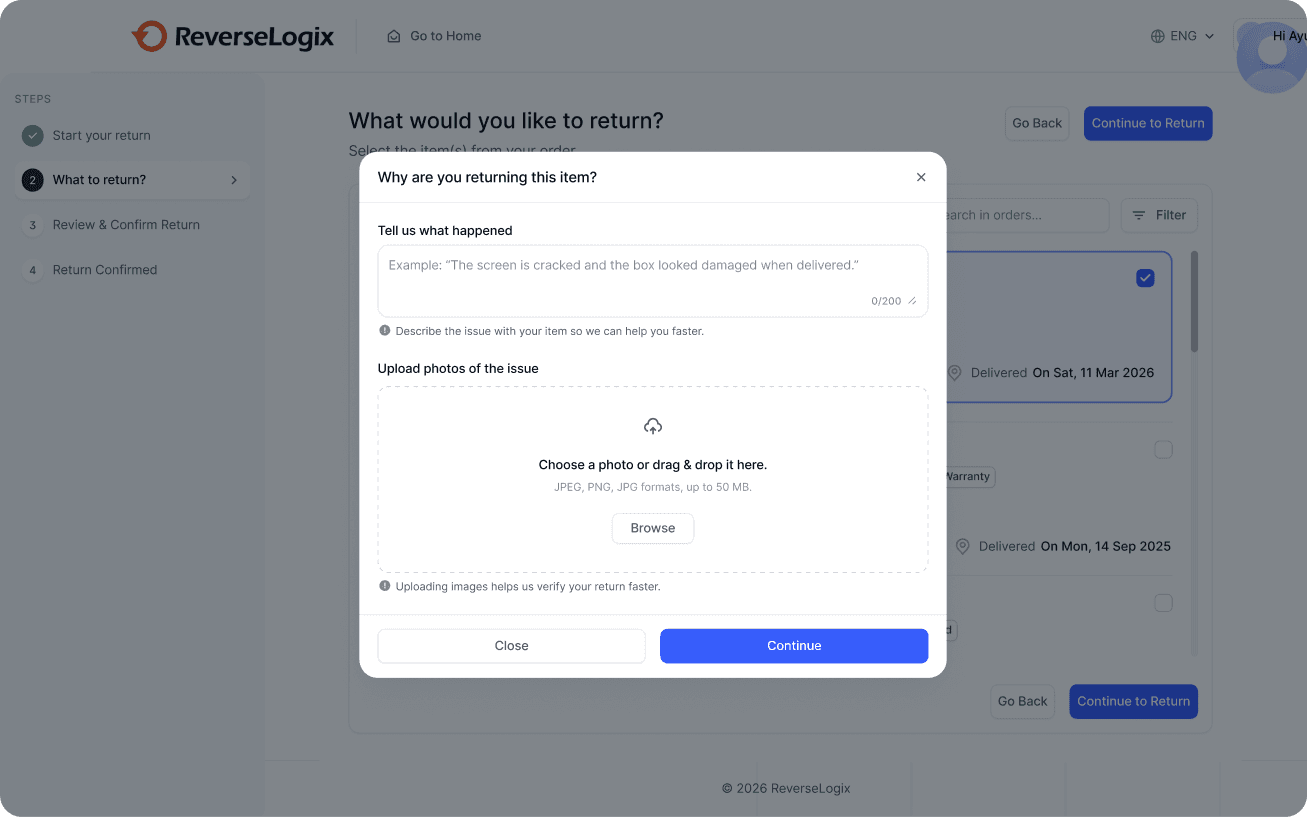
Issue description & evidence upload
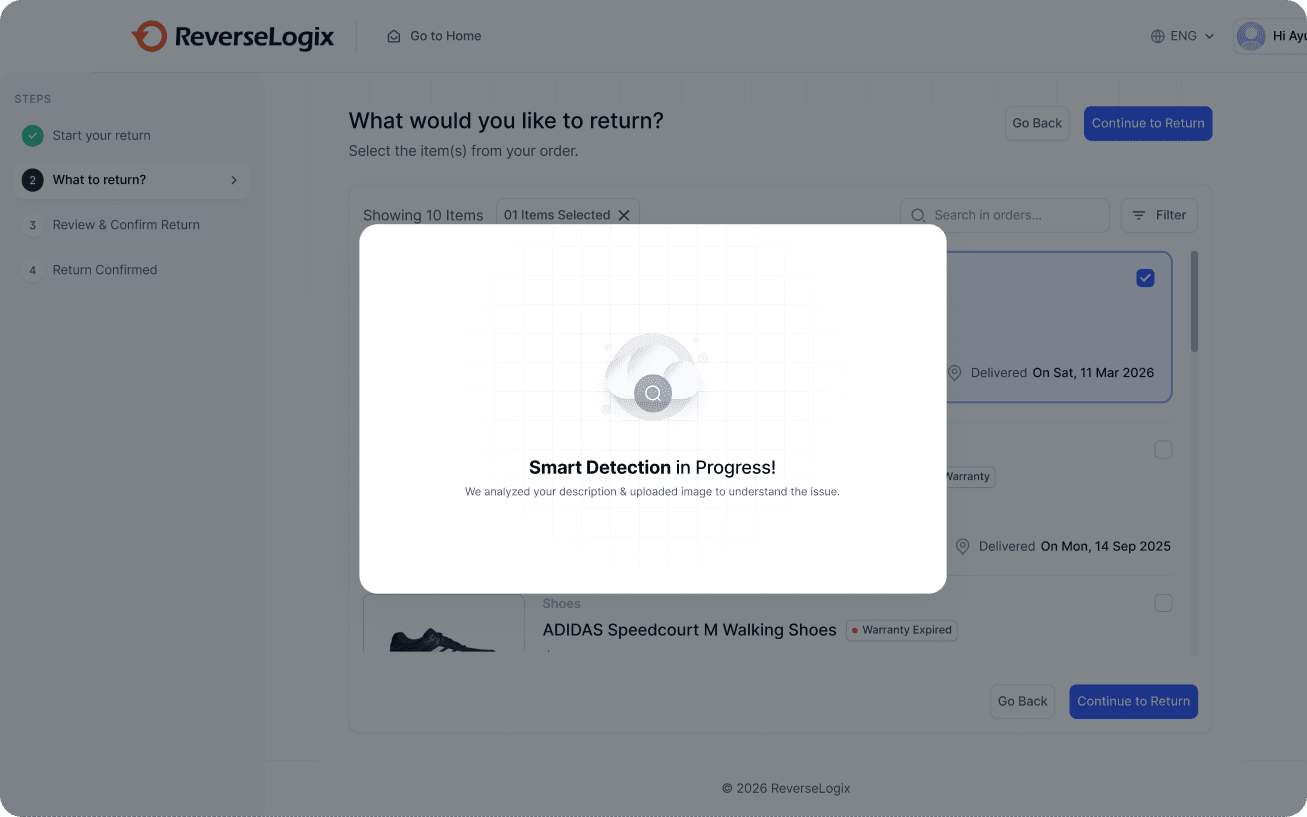
AI issue detection
AI reason confirmation
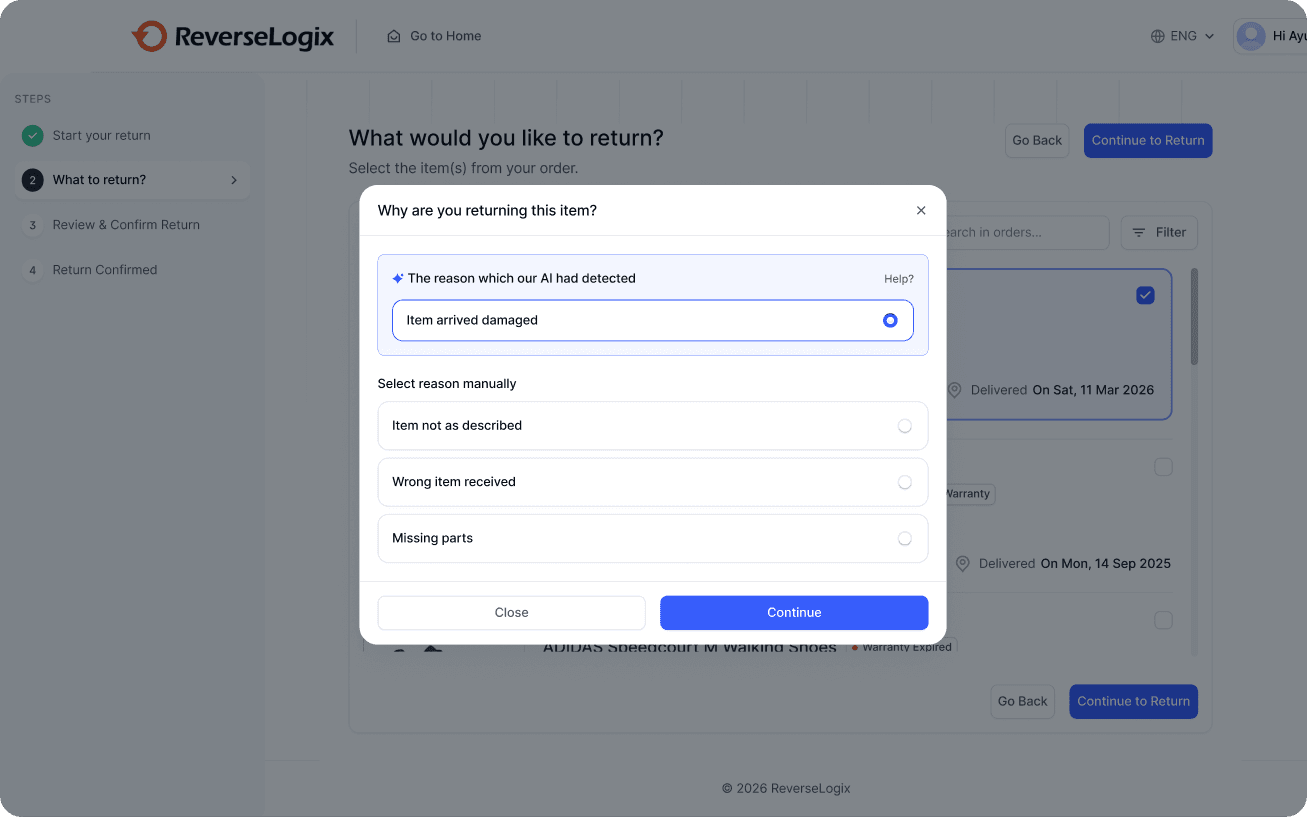
Manual reason override
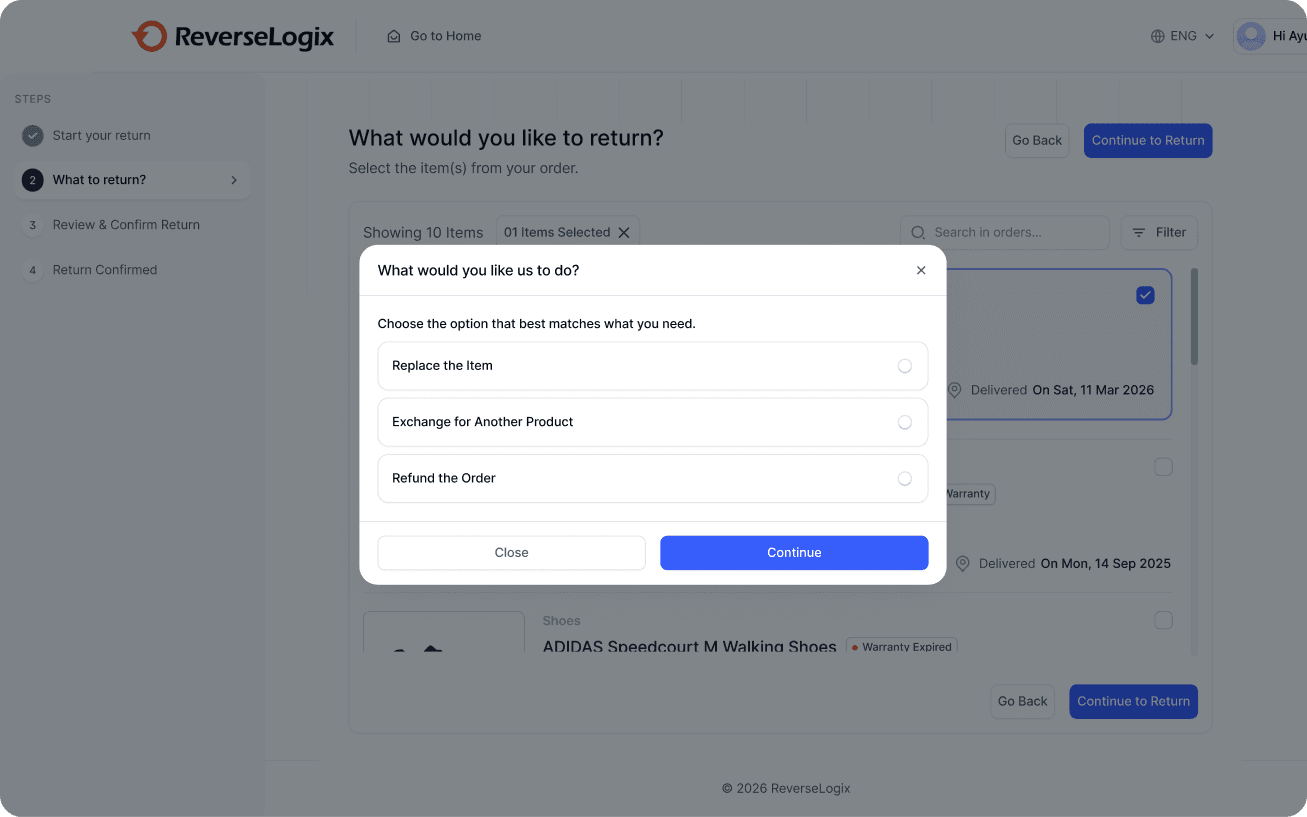
Resolution selection
UI Modules
Issue Description & Evidence Upload
Users describe the problem and upload images of the product issue.
Providing evidence early helps reduce disputes during inspection.
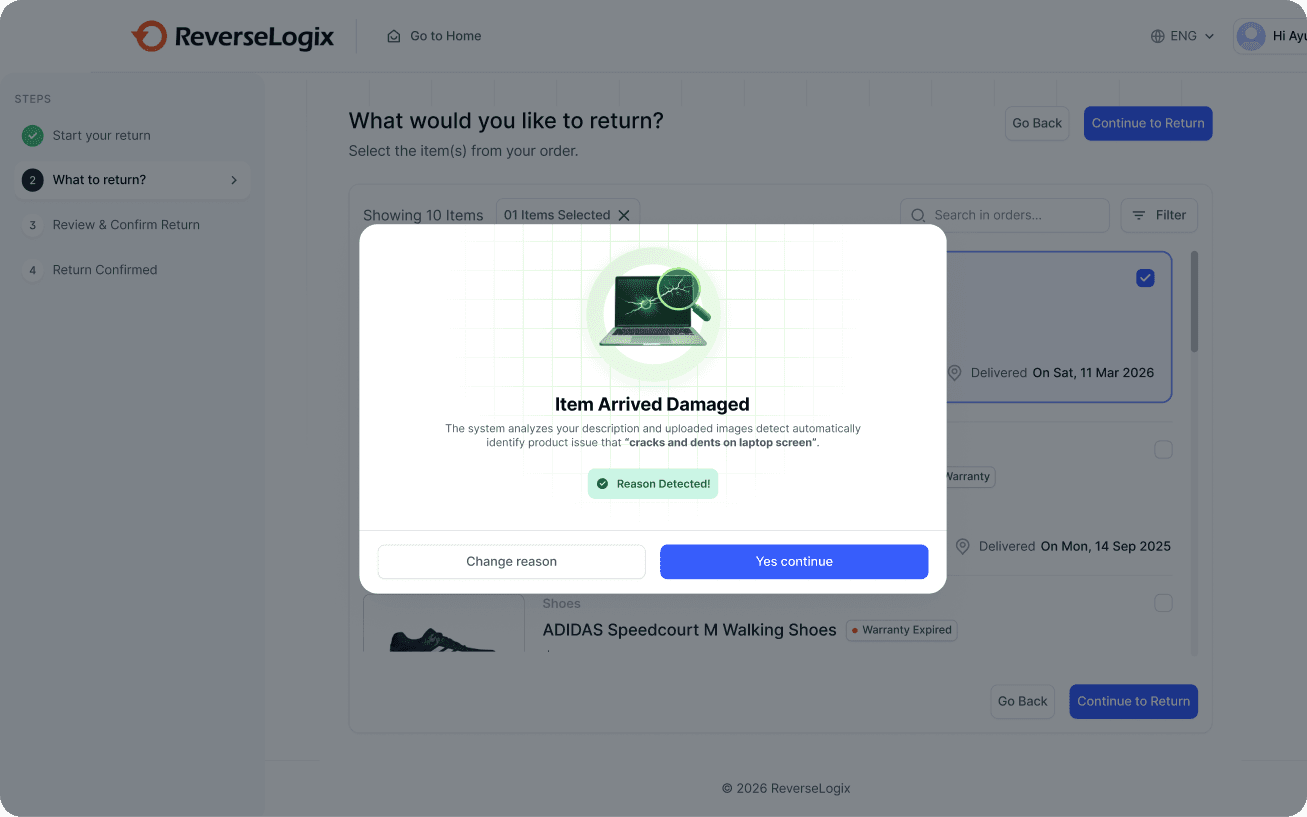
AI Smart Detection
Once the description and images are submitted, the system analyzes the data to understand the issue.
AI Return Reason Detection
AI identifies the most likely issue.
Manual Reason Selection
If AI detection is incorrect, users can select a reason manually such as:
Resolution Selection
Finally, users choose how they want the issue resolved:
Value Outcome
improves accuracy of return reasons
reduces manual review for retailers
increases trust through transparent validation
creates a smoother and more intelligent return experience
This step is operationally critical because the selected return reason drives downstream logistics decisions. I introduced AI-assisted reason detection so users can describe issues naturally while the system categorizes them accurately. This improves data quality and enables automated approval workflows.
Flow 05 - Review Your Return Request
After selecting the return reason and resolution, users must review the complete return request before proceeding to the confirmation stage.
Problem in existing concept shared by Reverselogix
In the original concept, this step provided very limited information, making it difficult for users to verify the details of their request before submission.
Design Decision
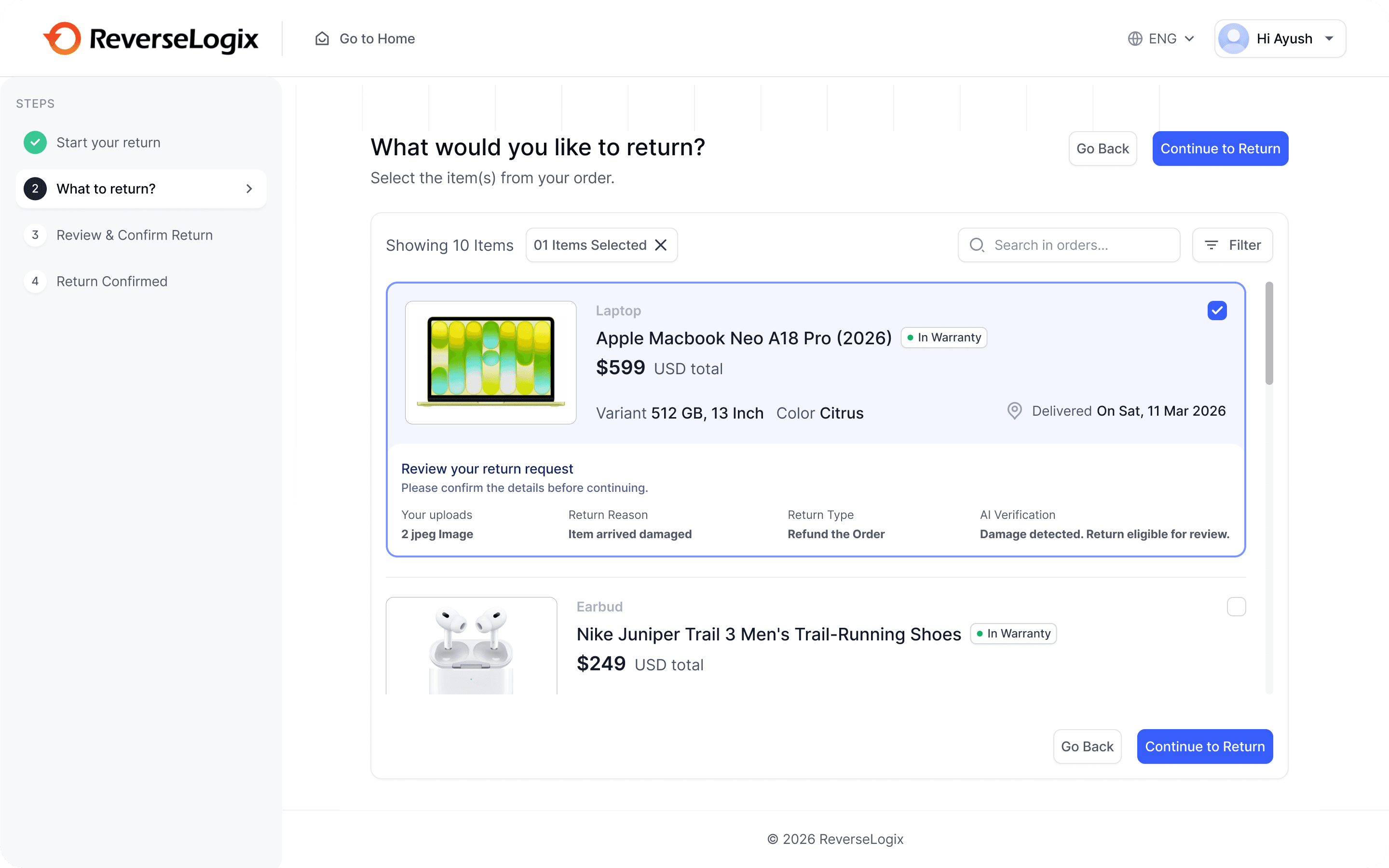
I introduced a dedicated review section within the selected product card, allowing users to clearly see all return-related information in one place.
UX Solution
Uploaded evidence (images)
Detected return reason
Selected return type
AI verification status
Value Outcome
This step improves user confidence, reduces submission errors, and ensures that the return request is validated before moving to the final confirmation stage.
Presenting this information together ensures users can quickly confirm that everything is correct before continuing.
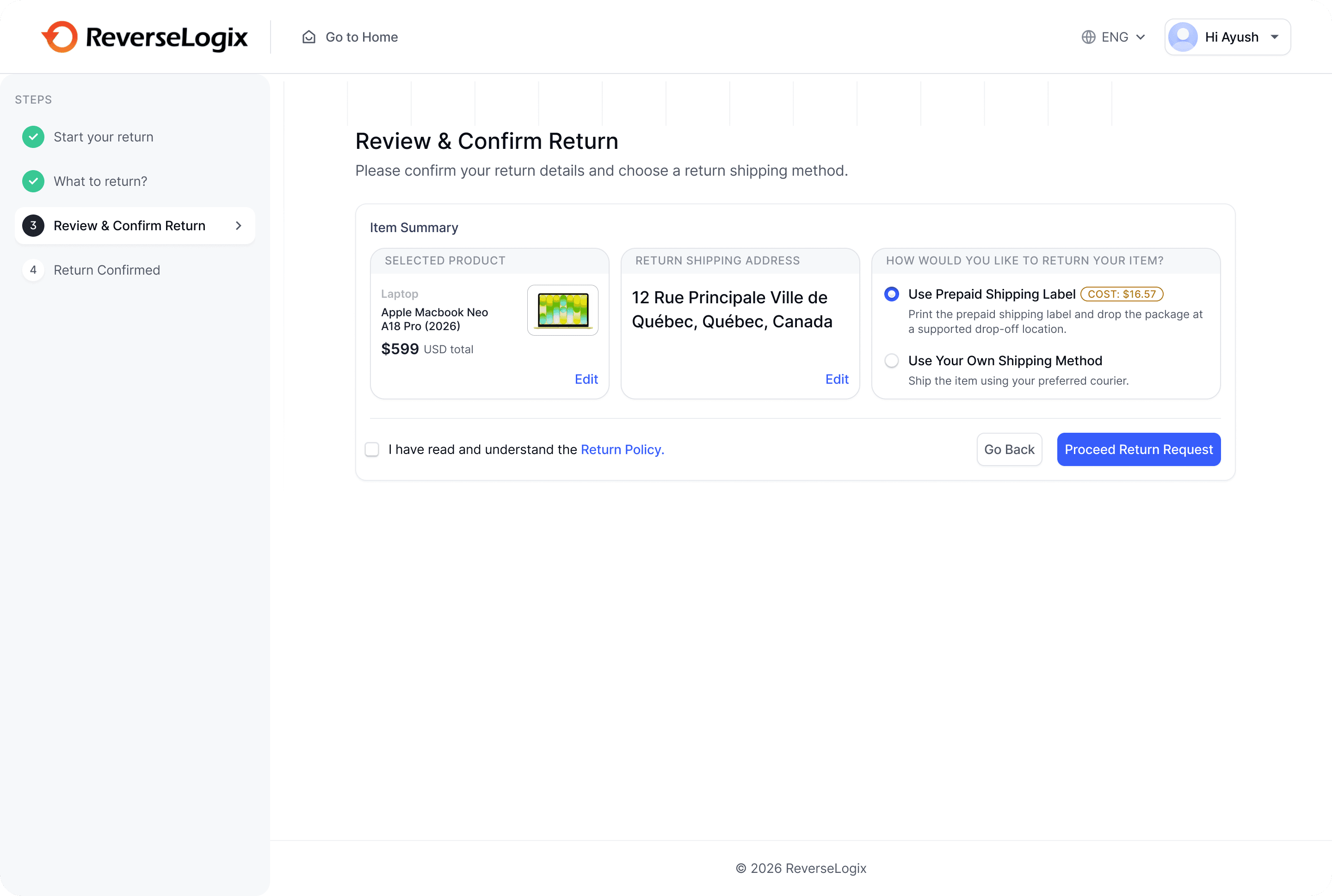
Flow 06 - Review & Confirm Return
After reviewing the return request, users must confirm their return details and choose a shipping method before submitting the return.
Design Decision
I redesigned this step into a structured confirmation layout with three clear sections:
Selected Product
Return Shipping Address
Return Shipping Method
UX Solution
Product summary with edit option
Pre-filled return shipping address
Two shipping choices (Prepaid label or own shipping method)
Return policy acknowledgment before submission
The structured confirmation step improves clarity, reduces shipping errors, and ensures users confidently submit their return request with the correct return method.
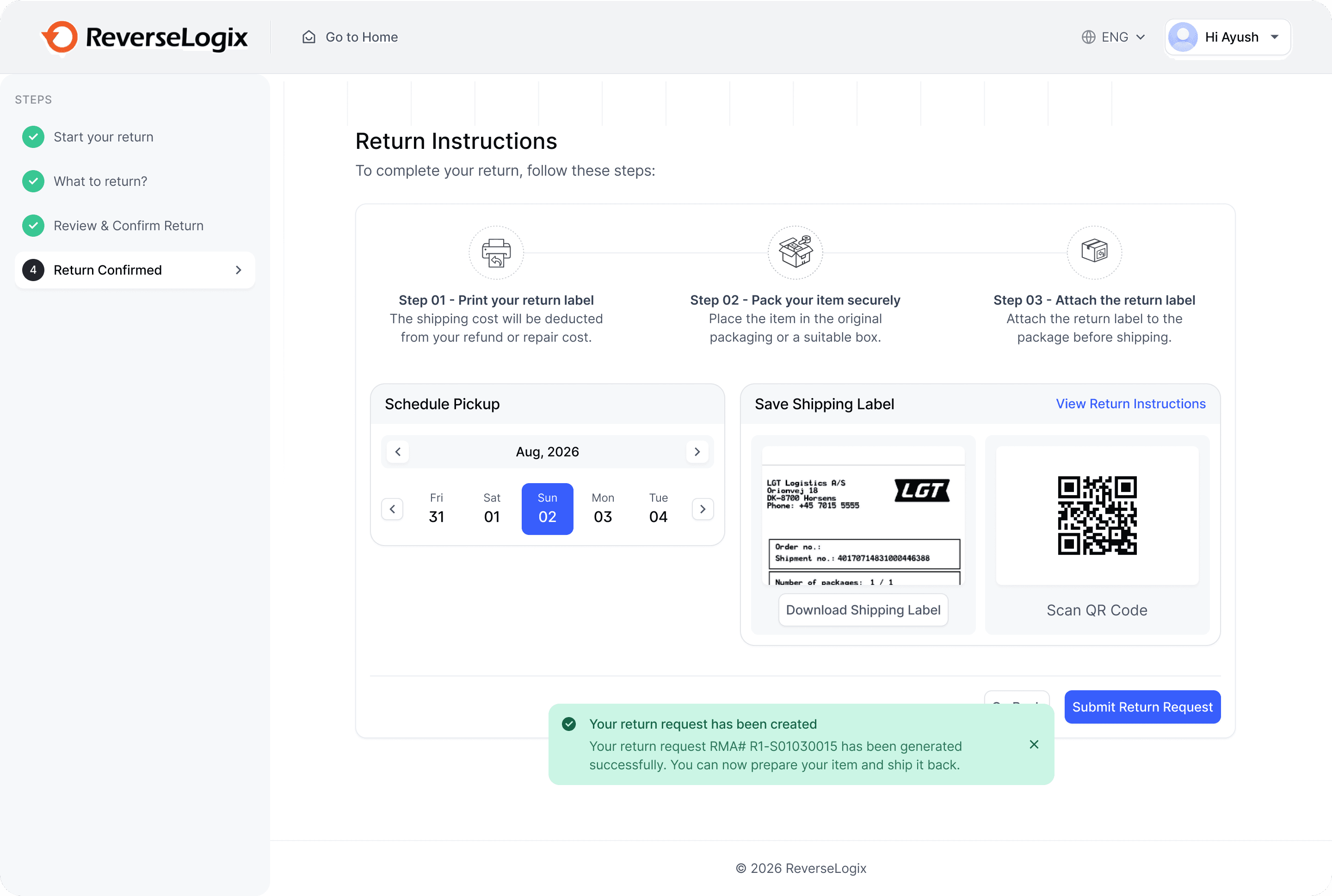
Flow 07 - Return Confirmed & Return Instructions
Once the return request is submitted, users need clear guidance on how to complete the return process and ship the item back.
Problem in existing concept shared by Reverselogix
The original concept displayed return instructions as long text blocks, making it difficult for users to quickly understand the next steps and required actions.
Design Decision
I redesigned the final step into a structured instruction-based layout that visually guides users through the return process.
Step-by-step instruction blocks
Pickup scheduling interface
Multiple shipping label options
Success confirmation notification
UX Solution
This final step ensures users clearly understand the return process, reduces confusion after submission, and improves completion rates by guiding them through the next actions required to ship their item.
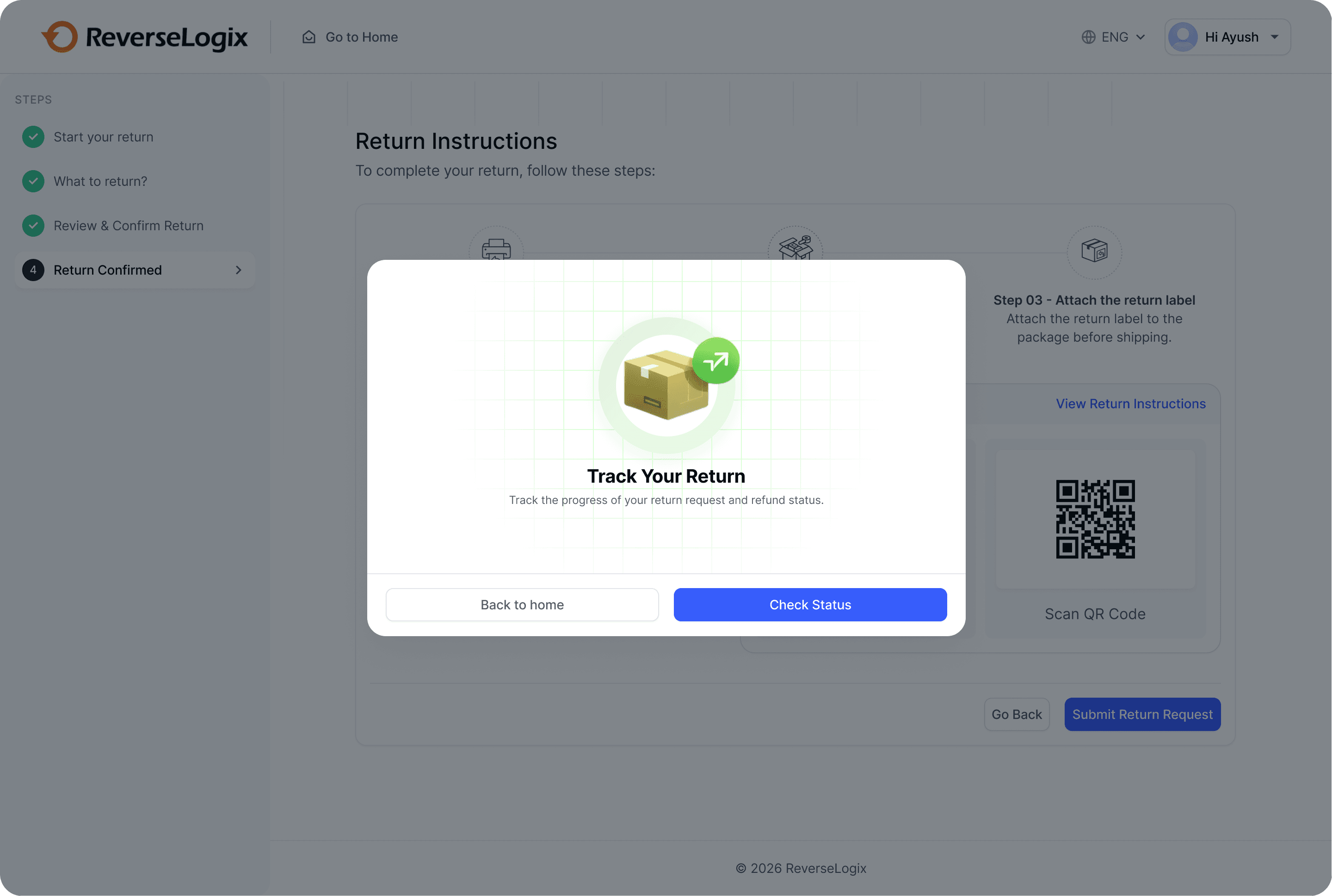
Flow 08 - Track Your Return
After submitting a return request, users often want to track the progress of their return and refund status.
Problem in existing concept shared by Reverselogix
In the original concept, users had no clear next step after completing the return request, which could create uncertainty about what happens next.
Design Decision
I introduced a post-submission modal that guides users toward tracking their return status. The modal appears immediately after the return request is successfully created.
This addition improves post-submission clarity, reduces support inquiries about return status, and provides a seamless transition from return creation to return tracking.